Member Menu

Don’t let writer’s block stop you from producing a great memoir!

“What can I do about writer’s block?” I am asked regularly by stumped writers.

“Pretty much the same as plumber does with a plumber’s block,” I’ll respond.

People twitter at this reply. Perhaps it’s because they take my response for a joke and they’re anticipating a good punch line.

Do what you have to do if you don’t let writer’s block stop you.

(more…)

Many writers agonize about just where to start a life story, where to begin a memoir. There are, of course, many places where a story can be launched.

1. The place in the story at which you begin a memoir writing manuscript is almost never the place at which readers will begin to read your story in its book form.

A writer begins someplace because beginning someplace is the way it is done. It is only much later that the writer will know where to place this initial piece of writing — at the beginning or elsewhere in the memoir.

2. The first paragraphs in a story may be only a warm up and not worth preserving.

The real beginning of your story can sometimes occur in a later paragraph. Move the paragraph that ought to serve as your lead to the beginning of your story and consign your warm-up paragraphs where they belong — in the wastebasket! You’ll be glad you didn’t hide your true lead under unnecessary false starts.

3. Once you know the crisis point of your story, the place where the action is at its most intense, where a turn around has to occur, you then know what in your memoir has to be built up to.

Sometimes people know this crisis before they begin to write; sometimes they have to write a while before they know what it is. Either way, knowing the crisis will be essential. Choose scenes that lead up to the crisis. The first of these scenes is perhaps your beginning.

4. To begin a memoir, choose a moment that is the zenith or the nadir of your story for the opening chapter.

The last sentence in the introductory chapter is something like: “How did I get to this point — zenith or nadir?” Chapter Two and the rest of the book then answer this question.

In conclusion

Good luck writing as you begin your memoir. Let me know what your experience has been.

If you are looking for printed material to add to your library, visit our bookstore or Smashwords.

(more…)

When you’re writing memoir, the project typically starts with a burst of energy. “This is going to be a good piece of writing! What am I saying, ‘good?’

“It’s going to be great!”

So we write for a month or two or even three and the energy remains strong but…

There comes a day when the demon that plagues all writers raises its ugly head and snaps at you.

“What in the world were you thinking of committing yourself to writing this horribly insignificant piece! And worse yet, what were you thinking of alerting other people that you were writing a memoir? Now, they’re going to expect something and you’re about to make a fool of yourself!”

Or, something equally terrible and intimidating goes through your mind. When that happens, what do you do?

(more…)

DL: An outline or a Memory List? This is a perennial favorite with the search engines. I consider it to be a foundational post whose info can guide you to success. I hope you enjoy it.

A Memory List is far superior to an outline!

For some writers, there comes a moment in writing a memoir when the audacity of the undertaking hits them. Perhaps they think doorslammers like: “This can take forever.” “Writing a memoir will never pay for itself.” “I can’t afford to do this!” They reach for certainty. And that certainly if often a reversion to essay and report writing. They want an outline to assure the task gets done right. So, an outline or a Memory List?

The following is a comment to someone who asked in the Memoir Forum if she should create an outline and how to know when the page and chapters were the right length.

1. Do not write a memoir from an outline.

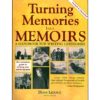
I do not write from an outline. Instead, I create a Memory List as outlined in Chapter 2 of Turning Memories Into Memoirs. The Memory List helps you to follow the promptings of the unconscious rather than the dictates of the conscious mind as happens with an outline. (An outline is great for an essay—”The Three Causes of the American Civil War”— but it is the death of an exploratory memoir.) So…

(more…)

Working with a memoir ghostwriter can bring you great joy as you collaborate to produce the book you have so long dreamed of. On the other hand, it can be a nightmare. Here are five questions to ask the references your memoir ghostwriter has given you about working with him or her. Was the memoir ghostwriter able to meet deadlines? 1. Was the memoir ghostwriter able to meet deadlines? Deadlines can be intermediate such as the pace of writing (50 pages a month) or when the draft copy is due or when you want to be holding the book in (more…)

It is important to spend some time shaping your theme as the theme is the message—the why—of your writing.

You imbue the whole of your story with your theme, and it, in turn, influences the choice of every element in your story—even when you’re not aware of it. In fact, all writing carries a message from the writer, an index of the motivation of the artist. Theme can be as broad as “There are good guys and bad guys, and you can tell them apart” and as subtle as “I want to tell others what it was like to live at a certain time of my life.”
(more…)

Successful Memoir Writing: 3 Tips Recently, someone asked me what are the biggest barriers memoir writers face to successful memoir writing. Three came to mind right away. Below, I write about them and offer suggestions for eliminating these barriers. 1. Writers often put off writing a good memoir in favor of struggling unsuccessfully to create a perfect one. This is insidious because no one says they are putting off writing a good memoir in favor of a perfect one. Instead they say, “I want my story to be meaningful” or “I want to be sure I have something to say” (more…)
Facts are important in memoir writing. The inclusion of dates, addresses, names, and relationships, are one of its special features. Memoir writing cannot, without deleting from its value, omit dates and specific identification of locales, names of individuals and their relationships to one another. Memoir writing is factual writing: hence the importance of facts. A memoir without these facts is like a map without route numbers. Whether I know the people in the stories or not, I always want to be able to move easily in the complicated terrain of relationships and the sequence of events so that I might, (more…)
Are You Using Lightning Bug Words? A lightning bug is a small, friendly flicker in our backyards, not enough light to illuminate even the smallest corner. On the other hand, lightning dazzles the eye. The sky is split open. Sometimes it makes our hair stand on end. In this piece, we look at the difference between lightning words and lightning bug words. The difference between the right word and the almost right word is the difference between lightning and the lightning bug.”  — Mark Twain Mark Twain uses the lightning/lightning bug comparison to talk about the importance of finding the (more…)
Don't let writer's blok stop you

Don’t Let Writer’s Block Stop You

“What can I do about writer’s block?” I am asked regularly by stumped writers. “Pretty much the same as plumber does with a plumber’s block,” I’ll respond. People twitter at this reply. Perhaps it’s because they take my response for a joke and they’re anticipating a good punch line. (more…)

development of theme

How to Begin a Memoir

Many writers agonize about just where to start a memoir. There are, of course, many places where a story can commence. (more…)

writing memoir

Writing Memoir Is Not Easy

When writing memoir the project typically starts with a burst of energy. “This is going to be a good piece of writing! Help to keep you writing your memoir. (more…)

the best memoir writing book

Should You Create an Outline or a Memory List for your Memoir?

I do not write a memoir from an outline. Instead I create a Memory List as outlined in Chapter 2 of Turning Memories Into Memoirs. The Memory List helps you to follow the promptings of the unconscious rather than the dictates of the conscious mind as is the case with an outline. (An outline is […]

shaping theme

Shaping Your Theme

You imbue the whole of your story with your theme and it, in turn, influences the choice of every element in your story—even when you’re not aware of it. Consciously shaping your theme can make your memoir. (more…)

Don't let writer's blok stop you

Facts Are Important in Memoir Writing

Facts are important in memoir writing. The inclusion of dates, addresses, names, and relationships, are one of its special features. Memoir writing cannot, without deleting from its value, omit dates and specific identification of locales, names of individuals and their relationships to one another. Memoir writing is factual writing: hence the importance of facts. A […]

lightning bug words in memoir

Lightning Bug Words

Are You Using Lightning Bug Words? How do we write in lightning and not in lightning bugs? Using the right words when writing your memoir will illuminate and inform your readers. (more…)